
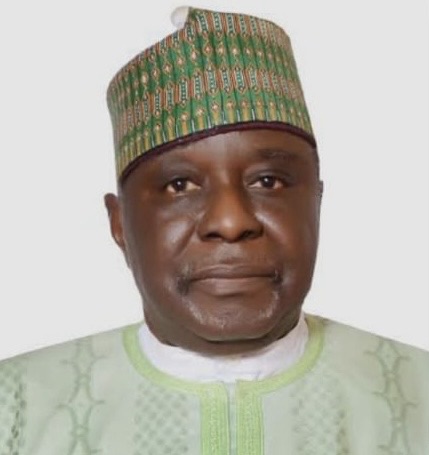
By Yusuf Ishaku Goje
Education serves as the bedrock for harnessing a demographic dividend and driving societal advancement, making public investment in this sector a pillar that demands rigorous and consistent scrutiny. In 2026, the state has allocated N243.9 billion to education, representing 24.7% of the total budget.
While substantial, this marks a proportional decline from the 26.1% allocated in the original 2025 budget. This year’s sectoral funding consists of N52.5 billion in recurrent expenditure, split between N38.3 billion in personnel costs and N14.2 billion for other recurrent needs, alongside a robust capital expenditure of N191.3 billion.
To ground these figures in reality, one must look at the preceding year’s performance. In 2025, the education budget underwent a 35.30% in-year revision, ultimately achieving a performance rate of 55.0%, as only N73.5 billion was released from a final budget of N133.6 billion. Such historical context is vital for managing expectations regarding the actualization of the current year’s ambitious plans.
The distribution of 2026 funds reveals clear institutional priorities. The Ministry of Education leads with an allocation of N96.4 billion, followed closely by the Kaduna State Senior Secondary Education Board (KADSSSEB) at N83.1 billion.
Other major beneficiaries include the State Universal Basic Education Board (SUBEB) at N27.9 billion and Kaduna State University (KASU) at N15.0 billion. The Kaduna State College of Education, Gidan Waya (COE) got N7.8 billion, the Kaduna State Scholarship and Loans Board at N7.0 billion, and Nuhu Bamalli Polytechnic, Zaria (NBPZ) got N5.7 billion.
The smallest allocations are dedicated to the Kaduna State Schools Quality Assurance Authority (KSSQAA) at N750.7 million and the Kaduna State Library Board at N104.8 million.
The capital funding strategy relies heavily on international partnerships, specifically through loans and grants. Notable borrowing includes World Bank loans for the Agile Programme, with N16.8 billion earmarked for school construction and N2.3 billion for digital skills training. Grant funding also plays a pivotal role, with World Bank grants for the Reaching Out of School Children (ROOSC) initiative providing N18.8 billion for construction and N10.9 billion for renovations.
A detailed look at economic classifications further clarifies the state’s operational focus. Infrastructure remains the primary driver, with N86.8 billion dedicated to the construction of public schools and N79.0 billion set aside for rehabilitations and repairs.
Beyond physical structures, the budget allocates N4.2 billion for the purchase of teaching and learning equipment, N4.1 billion for school furniture, and N1.0 billion for school overhead costs. Smaller but essential investments include N182.5 million for library books, N95.0 million for instructional materials, N9.8 million for female education expenses, and N4.5 million for the maintenance of classroom furniture.
Ultimately, while the 2026 budget demonstrates a clear commitment to educational infrastructure and institutional expansion, the success of these investments hinges on improved budget performance. The gap between allocation and actual release seen in the previous year serves as a reminder that financial planning is only as effective as its execution.
To truly transform the state’s human capital, the transition from high-level figures to tangible classroom impact must be seamless, ensuring that every billion allocated translates into a measurable improvement in the quality of learning and student outcomes.
Goje is an active citizen, civil society member and OGP enthusiast