

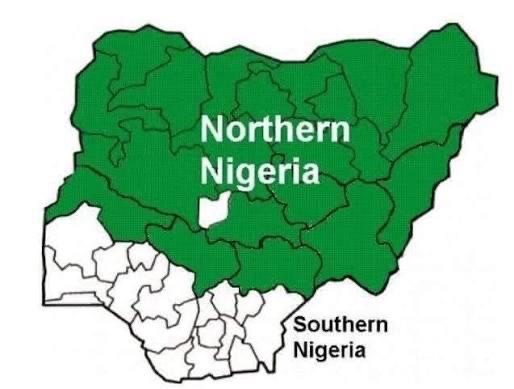
THE GEOPOLITICAL MISREADING OF AREWA:
Diplomatic Briefing – Op-Ed Edition
The emerging pattern of external interference through proxy terror networks—previously deployed in Iraq, Libya, and Syria—is gradually extending towards Sub-Saharan Africa. The signals are familiar: coordinated narratives, embargoes disguised as human-rights posturing, the sudden elevation of extremist actors, and subtle attempts to fracture national unity through targeted isolation of strategic regions.
In Nigeria’s case, the focus of this renewed geopolitical maneuver is Arewa—the Northern region, a zone that has historically survived colonial incursions, global economic shocks, and multiple internal conflicts with unparalleled resilience.
The international community must understand:
Destabilizing Northern Nigeria is not a regional issue.
It is an African continental emergency in the making.
A Dangerous Miscalculation: Terror as Geopolitical Leverage
The historical precedent is abundantly clear. Extremist groups used to topple regimes in Iraq, Libya, and Syria did not organically emerge—they were, in various forms, trained, funded, operationally shielded, and tactically released by foreign actors seeking regime change and resource access.
With the recent visibility of ISIS-linked leaders receiving diplomatic courtesies abroad, the message is unmistakable:
these groups are not isolated threats—they are strategic assets.
In Nigeria, the operational pattern is following the same trajectory:
selective embargoes targeting Nigeria’s security capacity,
punitive actions against patriotic security personnel,
human-rights rhetoric that protects insurgents but undermines state authority,
political pressures and internal manipulation to weaken state cohesion.
The intended outcome is to isolate Arewa as a soft entry point for destabilizing Nigeria.
But this is a strategic blunder of historic proportions.
The Humanitarian Reality Foreign Actors Are Ignoring
Arewa is not just a geopolitical bloc; it is the food basket of West and Central Africa, sustaining:
Nigeria’s population of 230 million,
Niger, Chad, Cameroon,
Parts of Mali, Burkina Faso, Sudan, and CAR through cross-border food trade.
Destabilizing Northern Nigeria would instantly collapse the agricultural backbone of an entire sub-region. The ripple effect:
- Famine on a scale unseen since the Biafran War and Ethiopia 1985
Maize, sorghum, millet, tomatoes, onions, livestock, grains—all originate heavily from Northern Nigeria. A collapse would starve tens of millions.
- A refugee crisis that would destabilize West Africa and Europe
Over 30–40 million Northerners could be displaced across borders, triggering the largest movement of people in modern African history—far exceeding Libya’s post-2011 displacement.
- Total collapse of ECOWAS food and security chains
Regional markets in Niger, Benin, Chad, and Cameroon depend on Arewa.
A destabilized North means collapsing customs revenues, markets, and trade routes.
- An unstoppable spiral of arms proliferation across the Sahel
Destabilization would turn open Sahelian borders into a vast corridor for militias and weapons—mirroring post-Gaddafi Libya, but exponentially larger.
The entire Sub-Saharan region would be thrown into hunger, conflict, and long-term instability—a humanitarian crisis of unprecedented magnitude.
Regional Precedent: The Niger Republic Example
When the ECOWAS bloc attempted a military intervention in Niger Republic, it was Northern Nigeria that firmly rejected the idea—and stopped it.
Why?
Because the North understands that destabilizing neighboring countries is destabilizing itself.
And likewise, Niger, Chad, Cameroon, Mali, and others know that destabilizing Arewa is a direct threat to their own survival.
In this context, it is unimaginable that Nigeria’s neighbors—who survive on Northern Nigerian agricultural and commercial lifelines—would tolerate any externally induced instability in Arewa.
A collapse in Northern Nigeria would be a collapse of their own national security architectures.
A Strategic and Cultural Misreading by Foreign Powers
Nigeria is not Iraq.
Nigeria is not Libya.
And Arewa is not an empty geopolitical space waiting to be carved.
It is:
A region with historical cohesion dating back to the Sokoto Caliphate and pre-colonial emirate systems.
A region with a population larger than most African countries combined.
A region with deep religious, cultural, and communal networks across borders.
A region whose resistance culture is shaped by the Jihad of 1804, the British conquest of 1903, and the Civil War of 1966–1970.
Foreign powers, especially those with fading imperial memories, must avoid miscalculating this depth of identity.
The Diplomatic Bottom Line
An attempt to destabilize Arewa using recycled terror-proxy architecture is not simply another geopolitical game. It is a trigger for:
Africa’s largest refugee crisis,
Africa’s largest famine,
the collapse of multiple states,
mass cross-border insurgency,
a humanitarian emergency on an international scale,
and a direct threat to European stability through migration shocks.
The cost will not be borne by Nigeria alone.
It will be paid by the entire region, and ultimately by the same global actors instigating the destabilization.
The stability of Northern Nigeria is the keystone of West and Central Africa’s survival.
It must not be tampered with.
Dahiru Yusuf Yabo Political & Security Analyst