
By Adamu Marshal
I. A Nation on Edge
Abidjan, October 2025. The air in Côte d’Ivoire’s economic capital is thick with unease. Posters of candidates dot the city, but for many Ivorians, the names missing from the ballot speak louder than those printed. In bars, churches, university lecture halls, and roadside markets, conversations circle back to the same question: how did a nation that once promised democratic renewal come to a point where its most recognizable opposition figures are erased from the race?
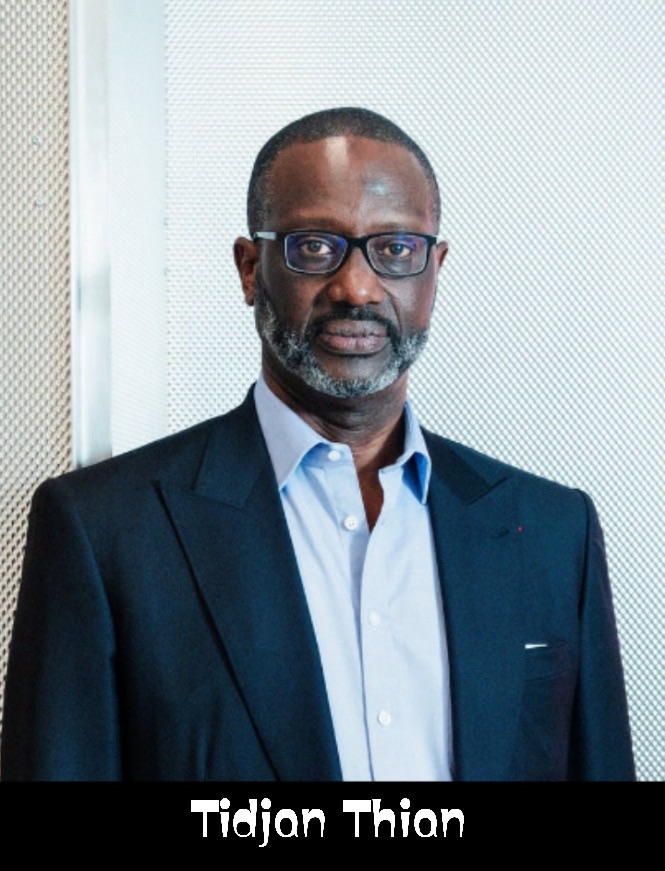
At the center of this storm is Tidjane Thiam — a man with one foot in the global financial elite and the other in the soil of Côte d’Ivoire, the country of his birth. His sudden exclusion from the presidential race has shaken not only the political opposition but also the faith of ordinary citizens who wonder whether their country’s democracy has been cornered by legalism, power, and ambition.
Thiam’s predicament, along with the sidelining of former president Laurent Gbagbo and several other challengers, has left President Alassane Ouattara poised to seek a fourth term — a bid branded unconstitutional and dictatorial by his critics. The opposition accuses Ouattara of engineering these exclusions to pave his way to victory. On October 4, demonstrators plan to flood the streets against what they call “the Ouattara project of eternal rule.”
To understand why the stakes are so high, one must retrace Thiam’s unusual journey — from Abidjan to Paris, from the boardrooms of London and Zurich to the tumultuous arena of Ivorian politics. His story is not just about one man; it is about what Côte d’Ivoire wants to be: a democracy of choices or a stage for one leader’s extended reign.
II. From Abidjan to the World
Born in 1962 in Abidjan, Tidjane Thiam grew up in a household steeped in politics and public service. His father, Amadou Thiam, was a journalist and politician, while his mother’s family descended from Houphouët-Boigny’s lineage, the founding father of Côte d’Ivoire. From the beginning, the young Thiam was raised to think beyond the ordinary, to imagine service not as duty alone but as a responsibility of heritage.
Gifted academically, he attended the Lycée classique in Abidjan before heading to France, where he broke barriers by becoming the first Ivorian admitted to the École Polytechnique. He then trained at the École des Mines de Paris, topping his class, before completing an MBA at INSEAD, one of the world’s premier business schools.
What followed was an extraordinary career: consultant at McKinsey, then rising through the ranks of global finance. He became CEO of Prudential, the British insurance giant, and later CEO of Credit Suisse, one of Europe’s biggest banks. By the time he resigned in 2020, he was regarded as one of the most successful African financiers in modern history.
Yet, for all his international acclaim, Thiam never lost sight of home. His first foray into politics came much earlier, in the 1990s, when he headed Côte d’Ivoire’s National Bureau for Technical Studies and Development (BNETD). In 1998, he briefly served as Minister of Planning and Development under President Henri Konan Bédié. But after the 1999 coup, he returned to Europe, spending two decades abroad before his dramatic comeback to politics.
In December 2023, Thiam was elected president of the Democratic Party of Côte d’Ivoire (PDCI-RDA), the country’s oldest political movement. With the PDCI’s vast structures and Thiam’s reputation as a clean, competent technocrat, he quickly emerged as a leading contender for the 2025 presidential race. For many Ivorians weary of political recycling, he represented something fresh: a man with both international clout and Ivorian roots.
III. The Legal Trap
But in Ivorian politics, popularity is rarely enough. In March 2025, Thiam renounced his French citizenship, which he had acquired decades earlier, to comply with constitutional requirements that presidential candidates be “exclusively Ivorian.” His supporters saw it as a sign of seriousness and commitment. But weeks later, the blow came.
In April 2025, a court in Abidjan ruled that Thiam be struck from the electoral roll. The reasoning: by acquiring French nationality in 1987, he had already “lost” his Ivorian nationality under Article 48 of Ivorian law. Even though he had renounced French citizenship, the court argued that loss of Ivorian nationality had been automatic and irreversible.
The ruling was declared final and not subject to appeal. In June, the electoral commission released its final candidate list for the October election — and Thiam’s name was absent.
To many, this looked less like law and more like lawfare. Opposition figures noted that the same rules had never been applied with equal zeal to others in the past. Critics accused the government of weaponizing nationality law to neutralize a serious challenger.
Thiam himself described the judgment as “a distortion of both law and justice.” In speeches, he reminded Ivorians: “I was born here. I have never stopped being Ivorian. They can manipulate the law, but they cannot change my birth.”
IV. The Shadow of Ouattara
Behind every exclusion, many Ivorians see one man’s silhouette: President Alassane Ouattara.
A former IMF economist, Ouattara first came to power in 2010 after a disputed election against Gbagbo — a conflict that left thousands dead. In 2016, he engineered a constitutional reform that reset term limits. In 2020, he ran for a third term, insisting the new constitution allowed it. The move sparked protests that killed dozens.
Now, in 2025, Ouattara is attempting what opposition leaders call “the ultimate insult to democracy”: a fourth term. Officially, he argues the constitution does not bar him. Critics retort that the spirit of democracy has been shredded and that term limits mean nothing if they can be reinterpreted at will.
For the opposition, the chain is clear: the removal of Tidjane Thiam, the sidelining of Laurent Gbagbo, the disqualification of other rivals — all are designed to clear the field for Ouattara’s unchallenged bid.
“Ouattara is not just running for president,” a PDCI youth leader in Yamoussoukro told me. “He is running from history. He wants to erase opponents so that only his name remains. But Ivorians are not blind.”
V. Gbagbo and the Others
Thiam is not alone in this predicament. Former president Laurent Gbagbo, acquitted of war crimes by the International Criminal Court, hoped to return to politics. Yet domestic courts cited old convictions and blocked his candidacy. Like Thiam, his name was absent from the electoral roll.
Several other opposition heavyweights faced similar fates. The pattern was unmistakable: one by one, credible rivals were sidelined under legal pretenses. For opposition groups, this was no coincidence — it was a systematic culling orchestrated from the top.
What makes Thiam’s case striking, however, is his profile. Unlike Gbagbo, he has no legacy of violent conflict. Unlike other figures, he is not bound to any regional base but appeals to a new, urban, youthful electorate. Blocking him signals not just fear of an opponent but fear of renewal itself.
VI. The Streets Respond
In August and September 2025, protests rippled across Abidjan and other cities. Students marched at the University of Cocody. Traders closed shops in Yopougon in solidarity. Civil society groups held vigils demanding “a free vote with all candidates.” Security forces dispersed gatherings with tear gas, and dozens were arrested.
On October 4, 2025, opposition coalitions are planning what they call the “March for Democracy.” Organizers expect tens of thousands in the streets, despite government warnings. Some fear violence, recalling the bloodshed of past electoral crises. Others see the march as the last stand against authoritarian drift.
“We cannot allow our children to inherit a Côte d’Ivoire where presidents choose their opponents,” says Mariam Coulibaly, a teacher in Abobo. “We must march, even if they beat us.”
VII. Beyond Borders
Why does this matter beyond Côte d’Ivoire? For one, the country is the world’s top cocoa exporter. Instability here sends ripples through global commodity markets. Already, traders in London and New York track Ivorian headlines with anxiety, fearing disruptions.
Second, West Africa is grappling with a democratic recession. From Senegal to Guinea, presidents have tested term limits. Coups in Mali, Burkina Faso, and Niger have shaken the region. Côte d’Ivoire, once held up as a relative anchor, now risks sliding into the same pattern of constitutional manipulation and unrest.
International actors — France, the African Union, ECOWAS, the United Nations — have called for calm. But critics note their statements have been cautious, often avoiding direct criticism of Ouattara. Many Ivorians feel abandoned, left to fight their battles alone.
VIII. The Road Ahead
What happens next? Several scenarios loom:
- Managed Election, Weak Field: If protests are suppressed and excluded candidates remain sidelined, Ouattara could win with ease. The election would be legal but lack legitimacy in the eyes of many.
- Escalating Unrest: If demonstrations intensify — particularly around October 4 — the risk of clashes, arrests, and violence grows. Côte d’Ivoire’s past suggests that political exclusion can quickly trigger conflict.
- Last-Minute Reversal: Though unlikely, international pressure or domestic negotiation could lead to partial reinstatement of candidates. But time is short, and courts have declared judgments final.
- Opposition Boycott: If key opposition parties withdraw, the election may proceed in form but collapse in credibility.
IX. Conclusion: A Democracy on Trial
Tidjane Thiam’s story is not just about one man denied a ballot. It is about what democracy means in Côte d’Ivoire today. Can laws meant to safeguard sovereignty be twisted to silence opponents? Can a president who has already stretched term limits bend them again without consequence?
Thiam, Gbagbo, and others represent different strands of opposition, but their common exclusion reveals a system where competition is feared, not embraced.
For ordinary Ivorians, the stakes are deeply personal. Democracy is not an abstraction — it is the difference between choosing a future or inheriting a destiny imposed from above.
As October approaches, Côte d’Ivoire stands at a crossroads. One path leads to a managed, controlled election that secures Ouattara’s power but risks long-term instability. The other — uncertain, contested, but necessary — is a future where choice is real, and democracy means more than names printed on posters.
In the streets of Abidjan, one slogan has begun to echo: “We are Ivorians. We will choose.”
Whether that cry will be heard, or drowned in the silence of exclusion, will define the nation’s history for years to come.