

By Ahmed Balarabe Sa’id
The recent Silver Jubilee of the Arewa Consultative Forum (ACF) culminated in a moment of profound significance, with the realization of a staggering N9 billion from its endowment fund launch. Impliedly, this is a colossal reservoir of hope, as it represents a tangible measure of the trust placed by Northern Nigeria’s elite in the ACF to serve as the architect of the region’s redemption. Yet, this triumph also presents the Forum with its most defining test. It arrives at a critical juncture of stark contradiction: a region endowed with unparalleled agricultural and mineral wealth languishing in a self-imposed shadow, while other parts of the country, with fewer natural gifts, navigate the currents of the 21st-century global economy. The judicious deployment of this fund will force a choice between perpetuating a legacy of wasted potential or pioneering a radical break from it. The most urgent investment is to however confront the crises that stem from this failure. This includes mainly the catastrophic number of out-of-school children and the consequent social breakdown that fuels rampant insecurity.
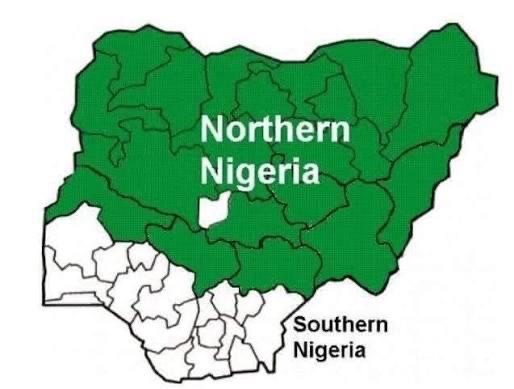
To understand the depth of the crisis, one must first acknowledge the great disparity. While Southern Nigeria, particularly the South-West, makes strides in tech hubs and financial services, and the South-South grapples with the paradox of oil wealth, the North remains trapped in a historical economic model it has failed to modernize. It holds over 60% of the nation’s arable land and is a treasure trove of solid minerals, from gold in Zamfara to lithium in Nasarawa, among several, yet the National Bureau of Statistics consistently ranks its states as the epicenters of multidimensional poverty, with rates exceeding 80% in some areas. This is not a fate imposed by nature but a failure of strategy. In the midst of a rapidly changing, technologically driven global economy, the North’s best resources remain buried in the ground or tilled with methods from a bygone era, its youthful population largely untrained for the digital age. This strategic stagnation has created a vicious cycle where poverty begets insecurity, and insecurity, in turn, makes development impossible.
The most devastating symptom of this failure is the silent, crumbling educational infrastructure, with figures clearly becoming an embarrassing indictment. With Nigeria accounting for over 20 million out-of-school children, the North is the undisputed epicenter of this catastrophe. According to UNICEF, in several Northern states, over half of all children are not in school. This is in stark contrast to the South, where literacy rates are significantly higher. Sadly, these Northern children are not simply “out of school”, but are a generation being systematically de-activated from the modern economy, left as raw material in a landscape where alternative opportunities have been squandered. They are the human consequence of a region that has failed to convert its vast resource wealth into human capital.
This educational deficit constitutes the primary fuel for the insecurity that now defines the region. The link is brutally causal. The Armed Conflict Location & Event Data Project recorded thousands of fatalities from bandit violence in the Northwest alone, suggesting that these gunmen on rampage are the products of a system that offers no classrooms, no skills for a tech-driven world, and no viable pathways to livelihood. When the foundational structures of society collapse, and the promise of the future is extinguished, what remains is a vacuum of desperation. The relentless attacks on communities are fueled by a vast and growing population of young men who have no stake in a society that has failed to harness its own wealth for their benefit.
Therefore, the N9 billion fund secured by the ACF is a huge lifeline. Itmust be leveraged as a strategic instrument to break this cycle. This requires a comprehensive plan that directly addresses the historical failures of underdevelopment. The bulk of the fund could be allocated to a Northern Education Voucher Scheme, providing direct financial aid to the poorest families. For the millions of adolescents too old for conventional primary education, a Modernized Skills & Apprenticeship Fund is essential. This must go beyond traditional crafts to include digital skills, renewable energy technology, and agri-tech, creating a workforce for the economy of tomorrow, not yesterday.
Furthermore, a portion must cultivate human capital through a Northern Teacher Corps, recruiting and incentivizing the best graduates to teach in high-risk rural areas. Finally, a transparent Advocacy Unit is non-negotiable to pressure state governments to convert resource wealth, like mineral royalties, into tangible investments in education and infrastructure.
The challenge before the Arewa Consultative Forum is ultimately one of historical courage. To spend this N9 billion on conventional, low-impact projects would be to repeat the errors of the past. This fund represents a significant seed. If planted in the fertile but neglected soil of Northern Nigeria’s human potential, it can grow a new future. An educated, skilled, and technologically literate child is the most permanent asset for security and development, far surpassing the fleeting value of any mineral extracted from the earth. The North’s vast resources were not enough to save it from decline; its true redemption lies in its people. The ACF must now prove it has the vision to make that investment.
Sa’id is a Strategic Communications Consultant, and he writes from Abuja.