

By Ishaku Williams Adakye
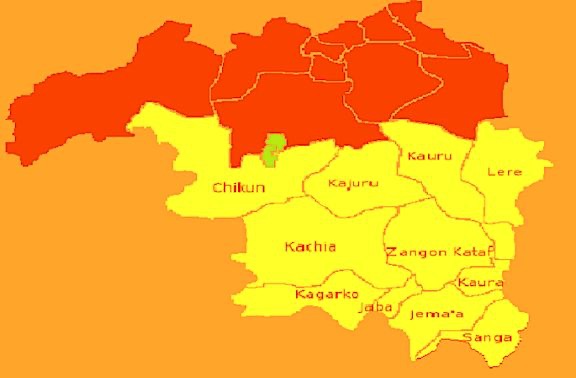
Southern Kaduna, with its rich political history and diverse cultural heritage, has always been a significant player in Kaduna State’s political landscape. As the 2027 general elections approach, the region once again finds itself at the centre of intense political realignments, party manoeuvrings, and the recurring question of loyalty among its political class.
Over the years, party politics in Southern Kaduna have been shaped by a complex interplay of ideology, ethnicity, personal ambition, and the quest for recognition within the larger Kaduna political landscape. The region has traditionally been viewed as a stronghold of the People’s Democratic Party (PDP), a status built over decades of consistent voter support and perceived alignment with the region’s aspirations for inclusion and justice. However, the emergence of the All Progressives Congress (APC) and a few other political platforms has introduced a new dimension to political competition, gradually shifting the balance of influence.
Loyalty in politics, once seen as a matter of principle and ideology, has in recent times become fluid in Southern Kaduna. Many political actors now align themselves with parties not necessarily based on conviction, but on opportunities for personal advancement or political survival. This has resulted in frequent defections, especially during pre-election periods when internal party crises or disagreements over candidate selection arise. Such movements often reflect deeper issues within party structures—ranging from lack of internal democracy and marginalisation of loyal members to imposition of candidates and absence of fair primaries. As a result, many politicians shift allegiance to other parties where they believe their ambitions can thrive. While some defections are driven by personal grievances, others are orchestrated as part of broader political strategies to weaken opponents or reposition for negotiations.
Frequent defections, though not new to Nigerian politics, have far-reaching implications for political stability in Southern Kaduna. They often breed mistrust among party members and undermine collective efforts toward unity and development. For voters, it creates confusion, weakens political accountability, and blurs the line between ideology and self-interest. Moreover, the absence of consistency among key political actors discourages emerging young leaders who look up to them for mentorship. It also erodes public confidence in the political process, making governance appear as a game of convenience rather than service to the people.
As 2027 approaches, the people of Southern Kaduna face a critical decision—to either continue in the cycle of defections and fragmented loyalty or to rise above partisan interests for the sake of regional unity and progress. There is a growing awareness among voters, particularly the youth, about the need to evaluate politicians not by party symbols but by character, performance, and commitment to the people’s welfare. Political parties, on their part, must strengthen their internal mechanisms to promote justice, inclusiveness, and transparency. The era of imposing candidates or sidelining grassroots voices should give way to democratic processes that reward competence and dedication.
Southern Kaduna stands at a crossroads as the 2027 elections draw nearer. The region’s political strength will not be determined by the number of parties it aligns with but by the unity and integrity of its leadership. True loyalty should no longer be to parties or individuals but to the ideals of justice, equity, and development that the people deserve. If Southern Kaduna must reclaim its rightful place in the political affairs of Kaduna State and Nigeria at large, it must first heal from the divisions caused by defections and disunity. The path to 2027 should therefore be one of reflection, renewal, and genuine commitment to the common good.