
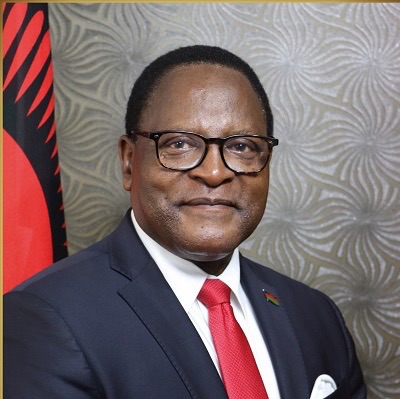
“This outcome is a reflection of your collective will to have a change of government, and so it is only right that I concede defeat out of respect for your will as citizens and out of respect for the constitution.”
— President Lazarus Chakwerela, President of the Republic of Malawi
In a world where elections are often marred by disputes, violence, and prolonged court battles, the words of President Lazarus Chakwerela of Malawi ring with rare clarity and dignity. By conceding defeat to his opponent, the former President, Chakwerela demonstrated that the true measure of leadership is not how long one holds onto power, but how one honours the will of the people when that power is withdrawn.
At its core, democracy is a sacred contract between the governed and those who govern. Citizens lend authority to their leaders, not as a permanent gift, but as a temporary trust. President Chakwerela’s concession reflects an understanding of this principle. By accepting the verdict of the ballot box, he affirmed that sovereignty rests not with any one individual but with the people of Malawi.
Across Africa, electoral politics has too often been dominated by leaders who refuse to relinquish power, even in the face of clear electoral defeat. Coups, political crises, and manipulated results have scarred the continent’s democratic journey. Against this backdrop, Malawi’s peaceful transition stands out as a beacon of hope. Chakwerela’s action is not one of weakness, but of courage. Proof that democracy can thrive when leaders choose statesmanship over selfishness.
The legacy of any leader is not measured solely by policies or projects but also by the moral example they set. By conceding gracefully, President Chakwerela has left behind a political culture that future generations of Malawians can build upon. He has shown that elections need not be battles for survival but opportunities for renewal and continuity of governance.
Malawi’s story carries lessons for Africa and the wider world. It shows that democratic values can take root in African soil, that peaceful transfers of power are possible, and that the respect for constitutions can be stronger than the hunger for power. If more leaders follow this path, the narrative of Africa will shift from one of instability to one of democratic resilience.
President Chakwerela’s concession was not the end of his influence but the beginning of his enduring legacy. It was a personal loss but a national victory. In bowing out gracefully, he lifted Malawi higher on the global stage and reminded us that democracy is not about winning at all costs. It is about respecting the voice of the people.
His words will echo across borders: “It is only right that I concede defeat out of respect for your will as citizens and out of respect for the constitution.” Such nobility is the heartbeat of democracy.
Congratulations to the people of Malawi
Senator Ehigie Uzamere