
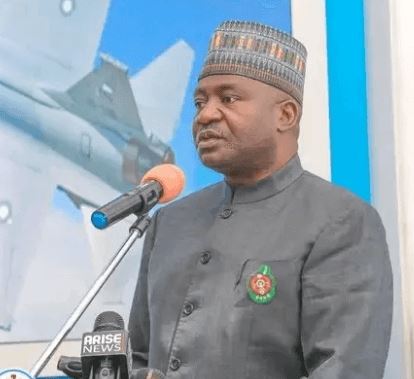
By Joe Nock
By all fair measures of leadership, General Christopher Gwabin Musa stands as one of the defining figures of Nigeria’s contemporary security history—a soldier whose career has been shaped not by noise or self-promotion, but by duty, discipline, and an uncommon moral clarity. In an era when public office is often weighed down by expediency and selective empathy, his journey—from the battlefield to the highest councils of national defence—offers a reassuring counter-narrative: that principled service is still possible, and that loyalty to country need not come at the expense of compassion for one’s people.
General Musa’s life in uniform speaks first through action. From his early days as a young officer to his commanding roles in counter-insurgency theatres, and later as Chief of Defence Staff, he earned a reputation for calm resolve under pressure and a deep understanding of the human cost of conflict. He did not merely command troops; he carried the burden of command with an awareness that every operational decision ripples through families, communities, and the fragile fabric of national cohesion. This sensitivity, rare and precious, has defined his leadership style.
This depth of competence and clarity of thought were placed in full public view during his Senate screening following his nomination by Mr. President. His performance on that occasion was, to say the least, exceptional. With composure and intellectual honesty, he laid bare his professional acumen—addressing complex security questions with precision, historical insight, and a refreshing absence of rhetoric. It was evident to observers that the General was not only prepared for office, but profoundly grounded in the realities of Nigeria’s security and development challenges. The screening did more than confirm his suitability; it reassured the nation that experience, not experimentation, was being entrusted with a sensitive national mandate.
Yet beyond medals, titles, and commendations lies a more intimate and enduring legacy—his unwavering identification with Southern Kaduna. In a country where many in authority remember their roots only in moments of political convenience, General Musa’s alignment with Southern Kaduna has been constant, persistent, and deeply personal. He has never pretended neutrality in the face of injustice, nor has he allowed his elevated office to distance him from the cries of a people long bruised by violence, neglect, and misunderstanding.
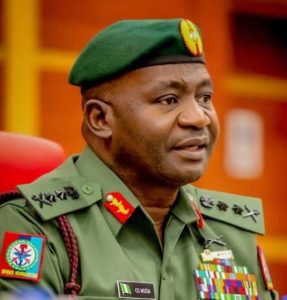
For the people of Southern Kaduna, his voice has often been a voice of reassurance: firm without being inflammatory, courageous without being reckless. He has consistently reminded the nation that security is not merely the absence of gunfire, but the presence of justice, dignity, and inclusion. His advocacy has not been sectional in the narrow sense; rather, it has been rooted in a broader national ethic—that no Nigerian community should feel invisible, expendable, or condemned to perpetual mourning.
Equally significant, though less loudly celebrated, is General Musa’s quiet but consistent engagement with developmental initiatives across the country. He has been privy to, and supportive of, myriad ventures that seek to improve livelihoods and strengthen social stability—not only in Southern Kaduna, but across Nigeria. From the North-West to the North-Central, and notably in Sokoto, the land of his birth, his interest in development has reflected a holistic understanding of national security: that roads, schools, opportunities, and inclusion are as critical to peace as boots on the ground.
What distinguishes General Musa is the balance he strikes between loyalty to the Nigerian state and fidelity to conscience. As a senior military leader and now a statesman entrusted with the nation’s defence architecture, he has never reduced complex challenges to simplistic narratives. He understands that lasting peace cannot be achieved by force alone, but by trust—trust between the state and its citizens, between communities, and between leaders and the led. This understanding has informed his calls for professionalism within the armed forces, respect for civilian lives, and cooperation with local stakeholders.
His rise to national prominence has not dulled his humility. Those who encounter him often remark on a quiet confidence that neither intimidates nor seeks applause. It is the confidence of a man secure in his purpose, shaped by years of service and sacrifice. Even in moments of national tension, he has projected steadiness, choosing words that heal rather than inflame, and policies that aim to stabilize rather than merely suppress.
In aligning consistently with Southern Kaduna, General Musa has also aligned with a principle Nigeria desperately needs to reclaim: that leadership must be seen and felt, especially by those on the margins. His stance sends a powerful message to young Nigerians—that one can rise to the pinnacle of national service without severing one’s moral roots, and that patriotism is enriched, not diminished, by empathy for one’s own people.
This tribute is therefore not only to a General or a Minister, but to a model of leadership. General Christopher Gwabin Musa represents the best of what Nigeria can produce when competence meets character, and authority is tempered by humanity. His life reminds us that the uniform, at its noblest, is not merely a symbol of power, but a covenant to protect—everywhere, and everyone.
As the nation continues its long and difficult search for peace and progress, voices like his matter. Steady hands like his matter. And for Southern Kaduna—and indeed for Nigeria—his example endures as a quiet promise: that courage can be compassionate, that loyalty can be just, and that service, when anchored in conscience, can still help heal a wounded land.